Strengthens Global Gear Manufacturing Capabilities Through Strategic Shareholding in Jinyi Gear

China Pneumatic Corporation


Precision • Capacity • Flexibility


China Pneumatic Corporation, located in Taoyuan, Taiwan, has announced a significant milestone in its global expansion and manufacturing strategy. The company has completed a new equity cooperation structure and has become a shareholder of Jinyi Gear in Suzhou, China. This strategic move greatly enhances China Pneumatic Corporation’s production capacity, geographic flexibility, and ability to support global OEM and ODM partners with competitive and diversified supply chain solutions.


Manufacturing plants


With the acquisition and integration now finalized, China Pneumatic Corporation reports that 3,600㎡ of its factory buildings in Suzhou have been completed, fully equipped, and are now operational, marking the beginning of a new era of collaborative production between Taiwan and China operations. The facility strengthens the company’s ability to provide scalable, high-quality gear manufacturing services to industries such as automation, robotics, power tools, motion control systems, agricultural machinery, industrial drives, and electromechanical systems.


Enhanced Production Capacity and Equipment Scale


China Pneumatic Corporation’s gear manufacturing division now operates with over:


100+ precision gear manufacturing machines, including


• CNC gear hobbing
• Gear shaping
• Gear grinding
• Heat treatment support systems
• Quality inspection and measurement equipment


This substantial machinery base enables the company to achieve:


Monthly production capacity exceeding 1,000,000 pcs, with steady growth plans already underway.


The increased capacity enables China Pneumatic Corporation to respond rapidly to customer demand, shorten lead times, and support customers requiring large-volume components with stable, repeatable quality.


Comprehensive Gear Design and Manufacturing Capabilities


With integrated engineering teams in Taiwan and China, China Pneumatic Corporation now offers a full spectrum of gear-related design and production services, including:


• Spur gears
• Helical gears
• Bevel gears
• Customized precision gears
• Gear reducers and gearbox assemblies
• OEM/ODM component development
• Engineering consulting and optimization


The combined capabilities allow China Pneumatic Corporation to support customers from concept development and prototype engineering through mass production and final assembly.


Flexible Manufacturing Origin: Taiwan & China Dual-Source Advantage


One of the core values created by this collaboration is China Pneumatic Corporation’s ability to provide:


Made-in-Taiwan manufacturing – for customers requiring


• Premium quality assurance
• Higher specification materials
• Compliance-focused sourcing
• Taiwan-origin certificates for export


Made-in-China manufacturing – for customers seeking


• Cost reduction
• Localized logistics and supply consolidation
• Shorter transportation routes within China or Asia
• Flexible shipping container arrangements


This dual-origin structure gives customers unprecedented flexibility to optimize:


• Cost strategies
• Delivery schedules
• Import tariff considerations
• Regional logistics planning
• Supply-chain resilience


Commitment to Global OEM/ODM Partners


With over 40 years of mechanical manufacturing experience, China Pneumatic Corporation continues to expand its capabilities as a reliable OEM/ODM partner for:


• Gear manufacturers
• Power tool companies
• Automation and robotics integrators
• Industrial machinery builders
• Gearbox and reducer system suppliers


Customers benefit from the ability to:


• Consolidate component sourcing
• Reduce freight and administrative costs
• Centralize inspection and shipment procedures
• Customize production volumes and packaging


This integration strategy supports global brands seeking a stable, diversified, and responsive supply partner that can meet evolving market requirements.


Quality Assurance and Engineering Excellence


China Pneumatic Corporation’s Taiwan headquarters continues to oversee:


• Design verification
• Engineering support
• Quality control systems
• Supplier development
• Technical documentation


Meanwhile, the Suzhou operation provides:


• Mass-production capability
• Cost-efficient manufacturing
• Regional logistics support
• Scalable workforce and equipment allocation


The result is a high-quality production system combining Taiwanese engineering oversight with competitive Chinese manufacturing capacity.


Strategic Growth Outlook


With the newly operational 3,600㎡ facility and strengthened shareholding cooperation, China Pneumatic Corporation is positioned for continued growth. The company plans to:


• Increase the machine capacity to exceed 100 units for gear manufacturing machines.
• Increase monthly production above 1 million gears
• Add automated inspection and robotic handling systems
• Develop new gear reducer product lines
• Enhance cross-border logistics consolidation services


These initiatives aim to support long-term partnerships and meet increasing global demand for precision mechanical components.


Customer-Centric Flexibility


Recognizing the diverse needs of international customers, China Pneumatic Corporation emphasizes its ability to provide:


Flexible order quantities
Mixed production sourcing
Container consolidation shipments
Custom packaging and labeling
Regional warehousing support


Whether customers require high-precision small-batch production or large-volume mass manufacturing, China Pneumatic Corporation can tailor production and delivery plans to meet special requirements.


A Strengthened Position in the Global Market


By combining Taiwanese engineering expertise with Chinese manufacturing scalability, China Pneumatic Corporation has created a competitive platform that supports:


• Faster response times
• Lower logistics costs
• Improved supply chain resilience
• Greater customization capability


This strategic shareholding move represents a major step in the company’s long-term mission to become a world-class supplier of precision gears and mechanical drive components.


About China Pneumatic Corporation


China Pneumatic Corporation, headquartered in Taoyuan, Taiwan, specializes in precision gear design, manufacturing, and gear reducer systems. With operations in both Taiwan and China, China Pneumatic Corporation provides high-quality OEM/ODM services to global customers in a wide range of industries.


For more information, partnership inquiries, or OEM/ODM cooperation opportunities, don’t hesitate to get in touch with us.

This strategic milestone marks a new chapter for China Pneumatic Corporation as it continues to expand its global footprint and provide flexible, high-value manufacturing solutions to customers worldwide.
How China Pneumatic Corporation’s Low Vibration Technologies Transformed the Global Pneumatic Tool Industry

How China Pneumatic Corporation’s Low Vibration Technologies Transformed the Global Pneumatic Tool Industry


For decades, reciprocating pneumatic tools—air saws, air files/lappers, and air hammers—were known for their high vibration, loud operation, and operator fatigue. They were essential in automotive repair, aerospace trimming, metal fabrication, construction, and precision manufacturing, yet they imposed ergonomic burdens and safety risks that industries accepted as unavoidable. That changed when China Pneumatic Corporation (CPC) pioneered the world’s first low vibration air saw, followed by its family of low vibration air files/lappers and shock reduced air hammers — technologies now protected by multiple international patents and quietly powering many of the world’s most famous tool brands. CPC did not merely introduce incremental improvements; it fundamentally redefined what pneumatic cutting and chiseling tools could be.


Reinventing the Air Saw: The First Global Breakthrough


Before CPC’s innovation, traditional air saws produced severe reciprocating vibration due to unbalanced motion, rigid housing design, and limited damping technology. These tools caused:


  • Operator fatigue and HAVS-related risk
  • Poor cutting accuracy
  • Limited control over thin metals or composites
  • Reduced productive working time


CPC’s patented low-vibration air saw design introduced:


  • counterbalanced internal mechanisms to cancel reciprocating forces
  • engineered damping structures isolating the motor from the housing
  • Redesigned stroke geometry, reducing lateral vibration
  • ergonomic housings improving grip, control, and smoothness


This was the first commercial solution that fully addressed vibration at its source—not by adding external padding, but through true mechanical innovation.


The result was a step-change in performance:


Operators could cut longer, more precisely, and more safely than ever before.


Low-Vibration Air File & Lapper: Precision and Comfort for Modern Manufacturing


CPC extended its vibration-reduction technology to air files and lappers—tools widely used in:


  • mold & die finishing
  • aerospace component trimming
  • automotive bodywork
  • composite manufacturing
  • metal deburring and polishing


The patented systems dramatically reduced transmitted vibration, enabling:


  • longer working time without fatigue
  • high-precision finishing on sensitive surfaces
  • better consistency across shifts and teams
  • lower long-term ergonomic risk for operators


These improvements opened new use cases—especially in the aerospace and high-precision industries, where vibration had previously limited tool adoption.


Shock-Reduced Air Hammer: A Revolution in Impact Tool Safety


Air hammers were historically notorious for:


  • Intense shock loads
  • Operator discomfort
  • Risk of repetitive-strain injuries
  • Limited controllability in delicate applications


CPC’s patented shock-reduction air hammer changed the category by introducing:


  • Impact-damping structures that absorb recoil
  • Optimized valve and piston geometry for smoother energy transfer
  • Reduced peak shock transmitted through the handle
  • Significantly improved controllability for fine work


The shock reduction not only improved operator safety — it increased productivity, because users could:


  • Maintain consistent chiseling pressure
  • Operate longer without strain
  • Achieve cleaner, more accurate results


This positioned CPC’s design as the benchmark for professional-grade pneumatic impact tools.


Setting New Global Standards for Ergonomics and Safety


CPC’s inventions arrived just as global standards bodies (EU, UK, OSHA, CE machinery directives) began tightening exposure limits for vibration and shock in industrial tools. CPC was one of the first manufacturers whose reciprocating and impact tool families met or exceeded these standards. As a result, many global OEM brands adopted CPC’s patented designs—either as private-label partners or as integrated technology suppliers.


Today, CPC’s technologies are sold under multiple well-known brand names worldwide.


Many companies claim performance leadership, but the core vibration-reduction engineering can be traced back to CPC’s pioneering patents.


How CPC Changed the Industry


1. Ergonomics Became a Strategic Priority


CPC proved that vibration was not an unavoidable byproduct—it was a solvable engineering problem.
After CPC’s success, “low vibration” and “shock reduced” became standard specifications for premium pneumatic tools.


2. Expanded Industrial Applications


Aerospace trimming, carbon fiber cutting, EV battery pack processing, precision mold finishing, and composite fabrication all grew rapidly thanks to the newfound stability and control of CPC’s low-vibration designs.


3. Higher Productivity Through Reduced Fatigue


Operators could work longer and achieve better accuracy, reducing rework and downtime.


4. Triggered Industry-Wide Innovation


Competitors began developing their own vibration-control technologies, stimulating a global shift toward safer, more ergonomic tool engineering.


5. Elevated Pneumatic Tools from Commodity Products to High-Value Solutions


Instead of being seen as consumable tools, air saws and air hammers became precision instruments—supporting premium pricing and professional markets.


Trusted Worldwide as the Quiet Power Behind Leading Brands


While CPC often works behind the scenes through OEM and ODM relationships, its technologies are present in:


  • automotive body shops
  • aerospace production lines
  • shipbuilding yards
  • metal fabrication plants
  • railway manufacturing
  • wind turbine and heavy-industrial maintenance


The world’s leading tool companies rely on CPC’s innovations to offer safer, smoother, and more advanced tools to their customers.


Changing the Industry from the Inside Out


China Pneumatic Corporation’s breakthroughs in low vibration air saws, air files/lappers, and shock reduced air hammers did far more than improve operator comfort. They transformed global expectations for how pneumatic tools should perform—ushering in a new era of safety, precision, and engineering sophistication.


Today, CPC’s patented technologies remain a foundational part of many internationally recognized brands, proving that a single company’s engineering vision can elevate an entire industry.


After more than 25 years, we remain proud of the role we played in introducing these world-first low-vibration and shock-reduced technologies to the global pneumatic tool industry. What began as a bold engineering vision has grown into an innovation adopted worldwide, reshaping safety standards, productivity expectations, and the way professional users experience pneumatic tools. Even today, we continue to stand behind these breakthroughs with the same commitment to craftsmanship, durability, and operator well-being that defined our original designs. Being part of this transformative chapter in industrial tool history remains one of our most outstanding achievements — and a lasting source of pride as we look toward the next generation of innovation.

How Wireless Rotary Torque Transducer Enables Real-Time Verification and Complete Data Collection

In modern manufacturing, torque accuracy is now essential rather than optional—it’s vital for ensuring product reliability, safety, and adherence to global quality standards. However, most factories still depend on traditional torque tools—impact wrenches, pulse tools, pneumatic tools, and many electric tools—that lack torque feedback and data traceability.


Our Wireless Rotary Torque Transducer (TTES / TTEB / TTAS / TTEH Series) completely transforms this. By connecting directly between the tool and the fastener, it turns any legacy torque tool into a smart, transducer-equipped, data-driven device, allowing for torque verification, real-time measurement, process monitoring, and automatic data collection on every fastening cycle.


1. Real-Time Torque Verification—Directly on the Production Line


Traditional calibration checks require removing the tool from the assembly line and testing it on a bench tester, which only verifies performance at that moment. But our wireless rotary torque transducer performs in-line verification during actual tightening operations.


How it works


  • Installed between the tool and the socket/bit.
  • Measures torque during real fastening (including dynamic torque profiles of impact and pulse tools).
  • Sends real-time data wirelessly (BLE/RF) to a controller, gateway, or PC.


This provides:


  • Instant verification that the tool is delivering the correct torque.
  • Immediate detection of calibration drift or mechanical issues.
  • Data to validate every single fastener, not just sample checks.


With our wireless rotary torque transducers, torque verification becomes continuous rather than periodic.


2. Complete Data Collection for Every Task and Every Fastening


Many industries (automotive, aerospace, heavy equipment, energy) now require 100% traceability for critical joints. Our wireless rotary torque transducers make this possible without replacing existing tools.


What data can be collected from every tightening?


  • Peak torque
  • Angle (optional with integrated angle encoder)
  • Torque curve profile
  • OK/NOK judgment
  • Time Stamp
  • Operator ID and station ID
  • Cycle count and tool performance trend


Where the data goes


Our wireless rotary torque transducer can connect to:


  • Torque Controller (TCA / TCB / TCC)
  • TMS Windows Software / Android APP (Torque Management System)
  • MES/ERP/QMS systems through APIs
  • Cloud dashboards or factory IIoT analytics platforms


This turns every fastening point into a source of actionable manufacturing data—critical for Industry 4.0.


3. Upgrade Any Existing Torque Tool into a Transducerized Smart Tool


Most torque tools on the market—air impact wrenches, hydraulic torque wrenches, pulse tools, and many DC tools—are not transducerized, meaning they provide no torque feedback.


Our wireless rotary torque transducer changes that.


Compatible tool types


  • Pneumatic impact wrenches
  • Pneumatic pulse tools
  • Air ratchets
  • Cordless impact wrenches
  • Cordless assembly tools
  • Manual torque wrenches
  • Torque multipliers / Nutrunners
  • Hydraulic torque wrenches


Immediate upgrade benefits


With one installation:


  • The tool becomes a torque device with built-in feedback.
  • The factory can perform accurate torque verification during production.
  • Every fastening is automatically recorded.
  • You don’t need to buy expensive transducerized DC tools.


This approach dramatically reduces investment costs while maintaining (or improving) data traceability.


4. Improving Production Quality and Reducing Rework


Using our wireless rotary transducer directly improves production efficiency and quality control.


Key benefits


  • Eliminates quality escapes by catching torque deviation immediately
  • Reduces rework and warranty claims through full traceability
  • Identifies worn tools early through torque signature analysis
  • Accelerates root-cause analysis with detailed torque curves
  • Supports certification & compliance (ISO 5393, VDI/VDE, automotive standards)


For global OEMs and Tier 1 suppliers, these benefits directly translate to lower costs and more stable production.


5. Plug-and-Play Integration with Industry 4.0 Systems


Our wireless rotary torque transducer is engineered for modern connected factories:


  • Supports BLE 5.0, RF proprietary, and optional Wi-Fi gateways
  • Low power consumption for over 8 hours of operation
  • Highly impact-resistant design for use with pulse and impact tools
  • Compact modular mechanical design fits various tool sizes


The transducer becomes a smart sensing node within the customer’s IIoT network—turning raw torque processes into valuable, analyzable data streams.


6. A Practical Upgrade Path for Manufacturers Worldwide


Instead of replacing their entire fleet of pneumatic or cordless tools with expensive DC transducerized tools, manufacturers can:


Option A: Keep existing tools


Option B: Add Wireless Rotary Transducers


Result: Achieve complete digitalization and torque traceability at a fraction of the cost.


This makes our wireless rotary torque transducers a powerful solution for:


  • Automotive final assembly
  • Heavy machinery
  • Truck and bus manufacturing
  • Aerospace MRO
  • Wind turbine construction
  • Industrial equipment assembly
  • Any critical bolting process


Our Wireless Rotary Torque Transducer is more than a measurement device — it is a complete, smart tool upgrade platform. By providing real-time torque verification and comprehensive fastening data, it converts traditional torque tools into intelligent, connected, transducerized tools suitable for modern Industry 4.0 environments.


Factories gain a practical, cost-effective path to achieving:


  • Full traceability
  • Better quality control
  • Reduced downtime
  • Data-driven process optimization


And most importantly: every fastening becomes verifiable, recordable, and trusted.

The Fundamentals of Torque Control in Modern Assembly Lines

The Fundamentals of Torque Control in Modern Assembly Lines

Empowering Precision, Safety, and Efficiency with ZIPPTORK Smart Torque Solutions


In every manufacturing sector—from automotive and aerospace to medical devices and electronics—the importance of torque control cannot be overstated. A single improperly tightened bolt can lead to vehicle wheel detachment, life-critical instrument failures, or malfunctioning electronic products.

Without torque control, engineers risk product failure, safety incidents, and rising costs from scrap and rework. Yet, in many factories, torque management remains overlooked or misunderstood, especially in traditional pneumatic tool environments.


Why Torque Control Matters


Torque represents the rotational force applied to a fastener. Controlling it ensures the proper clamp load—the real force holding components together. When the torque is too low, joints loosen under vibration; when it is too high, threads strip or parts deform.

Whether assembling a pacemaker, repairing an aircraft engine, or mounting heavy equipment, achieving the correct torque for every bolt is essential for safety, reliability, and traceability.


Variables That Affect Torque Accuracy


Several factors influence torque:


  • Friction coefficients (thread, under-head, surface)

  • Tool type and condition (impact, clutch, pulse)

  • Joint characteristics (soft vs. hard joints)

  • Operator technique

  • Environmental factors such as temperature or vibration


These variables make it critical to measure and monitor torque, rather than relying solely on theoretical values or tool calibration.


ZIPPTORK: Bridging OT and IT for Smart Torque Control


Traditional pneumatic tools excel in durability and power, but historically lacked data feedback. ZIPPTORK bridges this gap by integrating Operational Technology (OT) with Information Technology (IT)—enabling smart, traceable fastening under Industry 4.0.


1. Smart Torque Controllers (TCA/TCB/TCC Series)


ZIPPTORK torque controllers transform conventional pneumatic or hydraulic tools into precision-controlled systems.


  • Regulate output torque in real time

  • Interface with torque and bolt-load sensors

  • Record torque-angle curves and time-series data

  • Transmit results to IIoT/MES systems via Wi-Fi or Bluetooth


This enables production lines to automatically log tightening data, ensuring every fastener meets its specification.


2. Wireless Rotary Torque Transducers (TTES / TTEB / TTAS / STA Series)


ZIPPTORK’s patented anti-vibration wireless transducers can be integrated directly into impact, pulse, or clutch-type wrenches.


  • Measure torque dynamically under shock and vibration

  • Transmit signals wirelessly to controllers or gateways

  • Eliminate wiring constraints on moving tools

  • Maintain ±5–10 % accuracy in demanding environments


These transducers bring real-time torque visibility to pneumatic tools—once considered impossible.


3. Bolt Load Monitoring Systems (BLT & SWC Series)


For critical joints where clamp force matters more than torque, ZIPPTORK offers bolt-load transducers and sensing washers.

They measure actual bolt tension, not just torque, providing a direct measure of joint integrity.

This ensures optimal preload and prevents fatigue or loosening in heavy-duty applications such as wind turbines, rail bogies, and structural assemblies.


Smart Assembly Line Integration


In a modern assembly line, ZIPPTORK systems form a closed-loop fastening ecosystem:

  1. The operator uses a pneumatic impact or pulse tool equipped with a wireless torque transducer.

  2. The torque controller receives live data and applies real-time correction or cutoff logic.

  3. Each fastening record (torque, angle, time, status) is transmitted to the plant’s MES/QMS/SPC systems.

  4. Supervisors gain traceability reports, SPC charts, and quality analytics dashboards for complete transparency.


This seamless integration turns legacy pneumatic lines into data-driven smart assembly stations, ready for Industry 4.0 compliance.


From Precision to Prediction


Torque control is not merely a quality requirement—it’s a foundation of safety, reliability, and digital manufacturing. With ZIPPTORK’s advanced controllers, sensors, and bolt-load monitoring systems, manufacturers can ensure every joint is tightened correctly, verified instantly, and traceable globally.

By transforming traditional pneumatic tools into intelligent systems, ZIPPTORK empowers industries to achieve:


  • Higher accuracy

  • Fewer fastening errors

  • Complete traceability

  • Predictive maintenance and quality insights


ZIPPTORK – Smart, Affordable, Traceable.

The future of torque control and bolt-load monitoring for Industry 4.0.

Why Torque Controller + Impact Wrench Outperforms Oil Pulse wrench in Cost and Efficiency

Background: Clutched vs. Oil Pulse Wrench


When selecting an assembly tool, engineers typically compare clutched-type tools and pulse wrenches. Each has advantages and drawbacks:


  • Clutched tools

    • Torque Range: Up to ~400 in-lbs (33 ft-lbs). Effective for low to medium torque, but requires torque arms above ~80 in-lbs due to wrist reaction.

    • Accuracy: ±3%, meeting most assembly specifications.

    • Speed: 250–2200 RPM (slower at higher torque).

    • Maintenance: Simple (daily oiling).

    • Cost: Half the price of oil pulse tools.


  • Oil Pulse tools

    • Torque Range: 4–118 ft-lbs with minimal reaction, even at high torque.

    • Accuracy: ±10%, often insufficient where ±3% is required.

    • Speed: ~5,000 RPM, resulting in faster assembly.

    • Maintenance: Requires oil changes twice a year by specialists, resulting in higher downtime.

    • Cost: Twice as expensive as clutched tools, plus ~$300/year in service.


Conclusion from traditional comparison:

Clutched tools are cheaper and more accurate, but they are limited in terms of torque and ergonomics. Oil pulse tools are faster and more ergonomic, but they are also expensive and less precise.


Where ZIPPTORK Comes In: Impact Wrench + Torque Controller


ZIPPTORK introduces a third category: the impact wrench integrated with ZIPPTORK’s intelligent torque controller and wireless torque transducer. This approach merges the raw power and durability of an impact wrench with electronic torque measurement and shut-off control.


Key Advantages


1. Wider Torque Range, No Torque Arm Required

  • Impact wrenches can cover torque ranges far beyond those of clutched or pulse tools (hundreds to thousands of ft-lbs). The impact wrench’s specification determines the Controllable Torque range.

  • With ZIPPTORK’s torque controller, even high-torque applications are precisely managed without operator wrist strain or costly torque arms.


2. Accuracy Comparable to or Better than Oil Pulse Wrenches

  • Clutched tools achieve ±3 to ±5% accuracy, while oil-pulse tools lag at ±10 % to ±15 %.

  • ZIPPTORK’s controller and traditional air impact wrench system deliver ±10% to ±15% or better accuracy, adding data traceability—a requirement for Industry 4.0 and quality audits.


3. Lower overall Cost than Oil Pulse Wrenches, Lower Maintenance than both

  • Standard impact wrenches are mass-produced and low-cost compared to specialized clutch/pulse systems.

  • ZIPPTORK’s add-on controller transforms them into precision fastening systems at a fraction of the investment.

  • Maintenance is minimal: unlike oil pulse tools, no bi-annual oil service or downtime is required.


4. Higher Productivity, No Speed Penalty

  • Oil pulse tools are chosen for speed, but impact wrenches already operate at high RPM with rapid tightening.

  • With electronic shut-off and torque monitoring, the ZIPPTORK system prevents over-tightening while maintaining cycle speed.


5. Scalability & IIoT Readiness

  • Data collection and wireless transmission enable traceability across the production line.

  • Unlike clutched or oil pulse tools, ZIPPTORK’s solution supports integration with MES/ERP systems for Industry 4.0 compliance.


Cost-Saving Analysis

FactorClutched ToolOil Pulse ToolImpact + ZIPPTORK Torque Controller
Tool PriceLowHigh (≈2× clutch)Medium (standard impact + controller, still below higher torque pulse)
Accuracy±3% to ±5%±10% to ±15%±10%~±15% (with data traceability)
Operator ErgonomicsPoor at >80 in-lbs, needs torque armGood (low reaction)Good (controlled impact, no torque arm)
MaintenanceSimple, low costExpensive (oil change, service downtime)Low (standard impact service only)
SpeedModerateHighHigh
Torque RangeLimitedMediumVery wide (hundreds–thousands ft-lbs)
Data TraceabilityNoNoYes (IIoT-ready)


Overall Cost Saving:

  • Purchase: Less expensive than oil pulse tools.

  • Operation: Reduced maintenance, no torque arm, no service downtime.

  • Quality: Eliminates rework/scrap due to torque errors through digital monitoring.

  • Long-Term ROI: Delivers Industry 4.0 compliance without requiring expensive tool replacements.


Choosing between clutch and oil-pulse tools has always been a trade-off between accuracy, ergonomics, speed, and cost. With ZIPPTORK’s torque controller integrated into standard impact wrenches, manufacturers no longer have to compromise. The result is a cost-effective, accurate, ergonomic, and future-ready fastening solution—making it the most economical and scalable option for today’s assembly lines.

Why do airplanes use millions of rivets instead of welding?

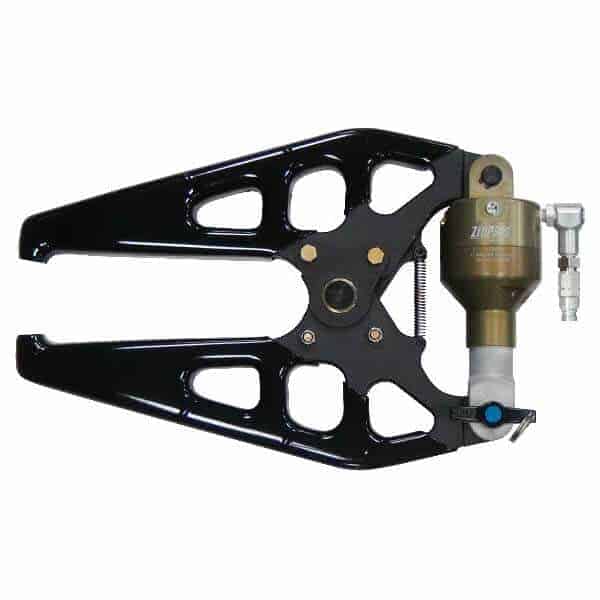
Z4000A Z5000A 10 inch Alligator Squeezer

In modern aircraft manufacturing, where safety and reliability are non-negotiable, millions of rivets must be installed with absolute precision. As discussed, riveting remains the backbone of aircraft assembly because it preserves material strength, ensures fatigue resistance, and allows for flexible load distribution — qualities that welding cannot provide for thin aluminum alloys or advanced composite structures.


This is where the Alligator Squeezer becomes an invaluable partner on the production line. Unlike conventional riveting methods that rely on heavy pneumatic hammers or guns, the Alligator Squeezer delivers a controlled, uniform squeeze force to form rivets without vibration or distortion. Its unique C-yoke design allows technicians to reach confined or hard-to-access areas of the fuselage, wing panels, and internal structures — places where precision and consistency are critical.


For thin-gauge aluminum skin or countersunk rivets used on stealth fighter surfaces, the Alligator Squeezer ensures each rivet is perfectly set, flush with the skin, and within aerospace tolerances. The tool’s consistent squeeze also minimizes operator fatigue and reduces the risk of human error, which is crucial when installing tens of thousands of rivets on a single aircraft.


By integrating the Alligator Squeezer into riveting operations, manufacturers can achieve:.


  • Higher rivet quality — uniform deformation, correct head shape, and reduced risk of micro-cracks around rivet holes.

  • Improved productivity — faster installation with less rework compared to hammer riveting.

  • Enhanced safety — vibration-free operation protects workers from Hand-Arm Vibration Syndrome (HAVS).

  • Access flexibility — ability to work in tight fuselage spaces where other riveting tools cannot reach.


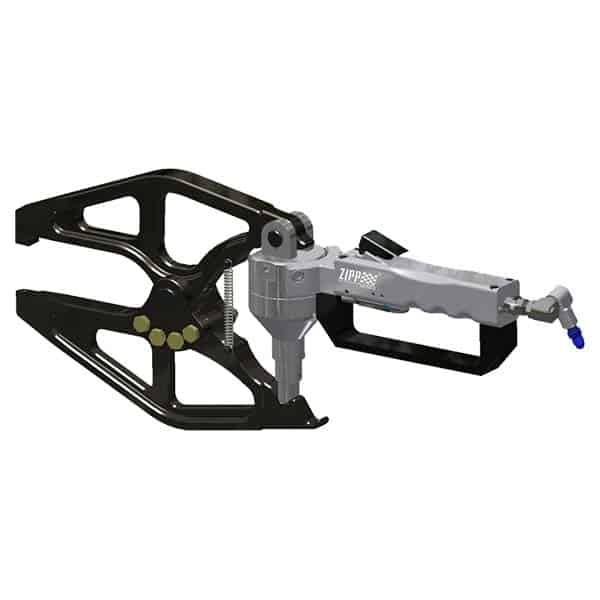
Z10AH-6 6 Inch Alligator Squeezer

Z10AH-6 6" Alligator Squeezer


Just as rivets form the invisible backbone of every safe flight, Alligator Squeezer plays a crucial role in ensuring that every rivet is installed to the highest aerospace standards. It’s a tool designed not only to meet the demands of today’s aircraft manufacturing but also to support the next generation of advanced airframes.


For more information, please visit our range of rivet squeezer products here

Ensuring Reliable Fastening with our patented Wireless Rotary Torque Sensor

In precision assembly, every fastening operation must deliver consistent torque to guarantee product safety, performance, and quality. Over time, however, power tools drift out of tolerance due to wear, vibration, or repeated impact. Without routine verification, this drift can compromise joint integrity and increase the risk of product failure. ZIPPTORK’s wireless rotary torque sensor provides a practical, real-time solution for validating tool calibration, measuring dynamic torque, and ensuring repeatable fastening results under actual operating conditions.


Why Dynamic Torque Measurement Matters


Unlike static torque checks, which measure fasteners after installation, dynamic torque measurement evaluates a tool while it is fastening. This approach captures the accurate torque profile under working conditions, including:


  • Operator technique and handling

  • Tool clutch performance

  • Frictional effects from lubricants, coatings, or washers

  • Joint stiffness and material behavior (hard vs. soft joints)


By simulating real-world fastening, ZIPPTORK’s wireless rotary torque sensor reveals whether a tool consistently meets specifications in the field.

How ZIPPTORK’s Wireless Rotary Torque Sensor Works


ZIPPTORK’s system integrates a wireless rotary transducer between the tool and the fastener. The sensor continuously monitors torque and angle throughout the fastening process, transmitting the data in real-time to a paired controller or software interface.

Key functions include:


  • Torque capture in real time – Records the exact torque delivered during fastening, not just at the end of the cycle.

  • Angle measurement – Tracks fastener rotation to validate that clamp force is achieved correctly.

  • Wireless data transmission – Eliminates the need for cables, making the system easier to use in production environments.

  • Shock and vibration resistance – Engineered to withstand the excessive impact of tools like air or cordless impact wrenches.


This setup effectively transforms a standard torque tool into a torque-monitored system, enabling immediate validation without slowing down production.

Conducting Routine Torque Verification with ZIPPTORK


With the wireless rotary torque sensor, a torque audit can be performed quickly and accurately:


  1. Select representative joints from the production line.

  2. Attach the rotary torque sensor between the tool and fastener.

  3. Tighten the fastener under normal conditions, letting the sensor capture dynamic torque and angle data.

  4. Review readings instantly via the paired ZIPPTORK controller or software.

  5. Compare results with specifications to verify calibration and repeatability.


This process can be repeated as part of a daily torque audit or scheduled preventive maintenance, ensuring tools stay within tolerance.

Data Collection and Torque Analysis


ZIPPTORK’s system does more than measure torque—it also provides a platform for data-driven quality control:


  • Record and store torque readings from multiple fastening cycles.

  • Plot torque trends to identify tool wear or operator variability.

  • Apply statistical process control (SPC) methods, such as Cp/Cpk analysis, to confirm process capability.

  • Maintain traceable records for audits and compliance.


By analyzing torque data, manufacturers can accurately predict tool maintenance needs, minimize unplanned downtime, and ensure consistent quality throughout the assembly process.


Best Practices with ZIPPTORK’s Wireless Torque System


  • Audit tools regularly (daily, weekly, or based on cycle counts).

  • Always test under real joint conditions—hard joint simulators alone don’t reflect field performance.

  • Combine torque + angle analysis for a more accurate assessment of clamp load.

  • Train operators to use tools consistently, minimizing variability.

  • Use stored torque data as part of a preventive maintenance program.


ZIPPTORK’s wireless rotary torque sensor simplifies calibration verification, captures real-time torque and angle under dynamic conditions, and provides actionable data for continuous process improvement. By integrating this tool into routine quality control, manufacturers can ensure their fastening processes remain accurate, repeatable, and reliable—reducing risk, avoiding costly rework, and guaranteeing the integrity of every joint.

Showcase Innovative Solutions at Taipei Aerospace & Defense Technology Exhibition (TADTE) 2025

booth direction
booth direction


We are excited to announce our participation in the Taipei Aerospace & Defense Technology Exhibition (TADTE) 2025, from September 18 to 20, 2025, at the Taipei Nangang Exhibition Center, Hall 1 (TaiNEX 1), 1F, located at No. 1, Jingmao 2nd Rd., Nangang District, Taipei, Taiwan. Visitors can find us at Booth I0801a.


As one of Asia’s top international platforms for aerospace and defense industries, TADTE connects global innovators, manufacturers, and defense technology providers. We will showcase our advanced solutions and cutting-edge technologies designed to meet the evolving needs of aerospace and defense applications.


Our company looks forward to engaging with industry professionals, partners, and visitors to explore collaboration opportunities and demonstrate how our expertise in precision engineering and innovation contributes to high-performance, reliable solutions for critical missions.


We warmly invite all attendees to visit Booth I0801a to see our latest developments firsthand.


Exhibition details @ https://www.tadte.com.tw

Wireless Torque Transducer: Redefining Torque Measurement and Control

wireless torque transducer

In the world of industrial assembly and maintenance, precision, durability, and efficiency are paramount. Traditional torque tools such as impact wrenches and oil pulse tools are widely used, but they often face limitations in torque accuracy, process monitoring, and long-term reliability. Addressing these challenges, ZIPPTORK introduces its groundbreaking wireless torque transducer, the world’s first anti-vibration and anti-shock torque sensor designed to withstand the harsh demands of high-impact tools—while delivering laboratory-grade accuracy in real-world working environments.


Real-Time Torque Measurement with ±1% Accuracy


ZIPPTORK’s wireless torque transducer sets a new benchmark in torque monitoring technology. With ±1% accuracy, it ensures precise tightening torque measurement and real-time process monitoring, even in high-volume production lines or demanding field operations. By integrating seamlessly with existing torque tools, this compact device provides engineers, technicians, and operators with confidence that every bolted joint meets strict quality standards.


The World’s First Anti-Vibration & Anti-Shock Torque Sensor


Unlike conventional torque sensors that quickly deteriorate under repeated shock loads, ZIPPTORK’s wireless torque transducer is engineered to handle excessive vibration and impact energy. This makes it uniquely compatible with torque tools such as impact wrenches, where repeated hammering would typically destroy traditional torque measurement devices. The result: a torque sensor that maintains durability and reliability without sacrificing accuracy, even under the harshest conditions.


Converting an Impact Wrench into a Torque-Controlled Tool


When paired with ZIPPTORK’s TCA, TCB, or TCC torque controllers, the wireless torque transducer transforms a standard impact wrench into a torque-controlled impact wrench with minimal upgrade cost. This innovation eliminates the need for expensive, high-maintenance torque tools such as oil pulse wrenches, offering a cost-effective, low-maintenance alternative that combines the power of impact tools with precise torque control.


Compact Wireless Design with Extended Battery Life


Designed with user convenience in mind, the ZIPPTORK wireless torque transducer features:

  • Compact and lightweight design for easy integration into existing torque tools.

  • Wireless operation for improved mobility and reduced setup complexity.

  • Multiple wireless protocols—RF 2.4G, WiFi, and Bluetooth 5.0—for compatibility across diverse working environments and conditions.

  • Extended battery life provides a minimum of 8 hours of continuous operation, ensuring uninterrupted productivity during long shifts.


Advanced Process Monitoring Features


Beyond torque measurement, ZIPPTORK’s wireless torque transducer offers pulse count monitoring to prevent common tightening errors, such as incomplete tightening or double hits. Combined with its ability to record and transmit real-time torque data, this functionality enables full process traceability—ensuring compliance with quality standards and reducing the risk of rework or product failure.


Transforming Torque Measurement Standards


By bringing together ±1% accuracy, anti-vibration durability, wireless connectivity, and torque control compatibility, ZIPPTORK’s wireless torque transducer represents a true evolution in torque technology. Whether in automotive assembly, aerospace applications, heavy equipment maintenance, or general manufacturing, this solution empowers companies to achieve greater precision, efficiency, and cost savings.

With ZIPPTORK, the future of torque measurement is smarter, tougher, and more reliable than ever before.

Turn Any Air Impact Wrench Into a Torque Controlled Tool with ZIPPTORK

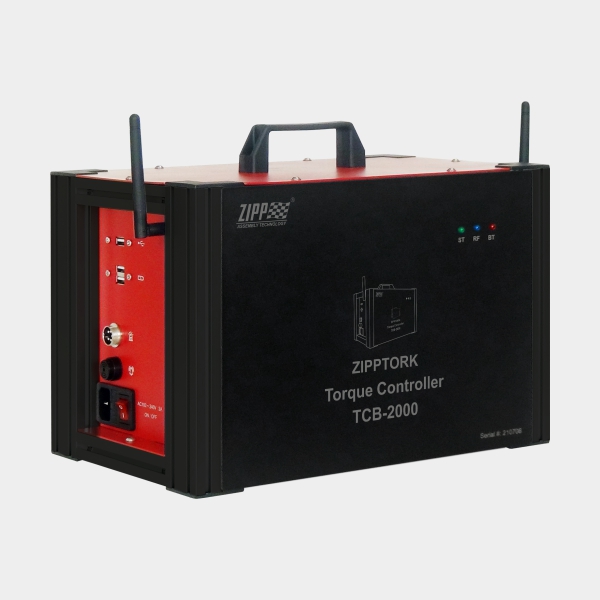
TCB Air Pneumatic Torque tool controller

ZIPPTORK’s torque controller upgrades a standard pneumatic impact wrench into a torque-controlled fastening tool delivering ±10% to ±15% accuracy (joint-dependent). It closes the historical gap between “roughing” with impacts and “controlling” with expensive, high-maintenance pulse or DC tools. Paired with an integrated wireless torque transducer, ZIPPTORK captures every tightening—time, torque curve, angle, and result—so you can monitor, trace, and improve your bolting process without replacing your existing air tools.


Why control torque on an impact wrench?


Traditional impact wrenches are fast and rugged, but they’re open-loop: operators “feel” or “count hits,” which leads to scatter, rework, and weak traceability. Pulse tools improve control, but they also come with higher costs, increased hydraulic maintenance, and more downtime. ZIPPTORK adds closed-loop control and digital traceability to the impact tool you already own.


How ZIPPTORK works


  1. Measure
    A compact wireless torque transducer sits in the load path (socket, inline, or adapter form factor). It streams high-rate torque and angle data during each hit.

  2. Model
    ZIPPTORK’s controller builds an adaptive model of the joint: it distinguishes rundown, snug point, yield tendency, and prevailing torque. It learns the joint rate (hard/soft) and compensates in real time.

  3. Control
    Using the model, the controller manages air flow and impact energy—modulating air to the motor and making a go/no-go decision on additional blows. It stops the tool precisely when the target torque window is reached.

  4. Verify
    The controller validates the achieved torque against the target and tolerance. If the last impact overshoots or undershoots, it flags the cycle and can automatically allow or block a corrective pulse within limits.

  5. Record
    The full torque-time-angle signature is stored and transmitted to your line system (e.g., MES/QMS). Each cycle is traceable by part, VIN/serial, station, operator, tool, and timestamp.


Accuracy: ±10% to ±15%—what it means and how you get it


ZIPPTORK delivers ±10% to ±15% torque accuracy on appropriately selected joints and tools by combining:

  • High-rate sensing of the dynamic torque peak during impact.

  • Joint characterization (hard vs. soft) and adaptive shutoff.

  • Controlled re-hit logic with decaying energy to “sneak up” on the target.

  • Calibration workflow using a reference transducer on a test joint.


Best practices to hit the tighter end (±10%)


  • Use a well-matched impact size for the torque range (avoid oversized tools).

  • Keep air supply stable (regulated pressure, adequate hose ID, minimal drops).

  • Set joint-specific programs (target, window, re-hit count, max time).

  • Validate with a daily check on a master joint or torque analyzer.

  • Maintain sockets/adapters; worn interfaces add scatter.


Note: Extremely soft joints, heavy prevailing torque, or highly elastic stack-ups may trend toward the ±15% end. ZIPPTORK detects these and applies the right control strategy while flagging cycles that exceed capability limits.

Replace pulse tools without their headaches.

AspectOil Pulse WrenchImpact + ZIPPTORK
Capital costHighUse existing impact + controller
MaintenanceHydraulic fluid changes, seals, and downtimeStandard pneumatic upkeep
SpeedFastFast (impact cadence)
AccuracyGenerally good±10%–±15% with adaptive control
Reaction forceLowLow (impacts)
TraceabilityOften optionalStandard: full cycle data
FlexibilityModel-specificWorks with many air impacts

With ZIPPTORK, you retain the speed and durability of impacts while gaining process control and traceability—often at a fraction of the lifecycle cost of pulse systems.


Integrated wireless torque transducer = complete traceability


  • What’s captured per tightening: part ID, program, final torque, angle (if applicable), OK/NOK, peak torque, rundown time, number of blows, re-hit count, operator ID, station ID, timestamp.

  • Live monitoring: dashboards for yield, Cpk, and alarms (e.g., tool drift, unstable joints).

  • Connectivity: edge gateway or direct API to your MES/QMS; local buffering prevents data loss.

  • Analytics: compare torque curves across lots, spot cross-threading, worn fasteners, lubrication changes, or operator technique issues.


Implementation workflow


  1. Application study
    Define torque range, joint type (hard/soft, prevailing torque), cycle time, ergonomics, and quality requirements.

  2. Tool pairing
    Match your current impact wrenches to ZIPPTORK programs; verify sockets/adapters and the wireless transducer form factor.

  3. Baseline & calibration
    Run a capability set on a master joint with a reference analyzer. Create target/tolerance windows and re-hit rules.

  4. Pilot run
    Deploy at one station, log results, and tune shutoff thresholds and air regulation.

  5. Scale-up
    Roll out programs to multiple stations; train operators on visual cues and NOK handling.

  6. Sustain
    Daily check on a master joint, weekly air line audit, and monthly program review using collected data.


Where ZIPPTORK shines


  • Automotive & off-road assembly: chassis, suspension, subframe, and service joints where speed matters but traceability is now required.

  • White goods & general industry: sheet-metal fasteners, frame assemblies, large fixtures.

  • Field service & repair cells: portability with data capture for regulated or warranty-critical work.


Safety, ergonomics, and quality


  • Low reaction torque: impacts transmit little steady reaction, reducing operator strain versus stall tools.

  • Fewer re-hits: precise shutoff lowers vibration exposure and noise compared to “free-running” impacts.

  • Poka-yoke: program-based interlocks (wrong program, missing data, out-of-window torque) prevent pass-through of bad assemblies.

  • Clear OK/NOK feedback: bright indicators and audible signals shorten decision time.


Limitations & how ZIPPTORK addresses them


  • Very soft or springy joints can degrade accuracy; consider using a multi-stage rundown with controlled re-hits or revisiting joint design.

  • High prevailing torque (locking nuts, inserts): set angle-over-torque criteria and monitor the curve shape to avoid misreads.

  • Tool health drift: caught by trend alarms and daily checks; swap sockets and verify balance.

  • RF-noisy environments: buffered logging prevents data loss; verify coverage during commissioning.


ROI snapshot


  • Lower capital costs by reusing existing impacts.

  • Less maintenance than hydraulic pulse systems.

  • Scrap/rework reductions from controlled, traceable torque.

  • Audit-ready records for customers and regulators.

  • Faster changeovers with saved joint programs.


Getting the most from ZIPPTORK


  • Stable, regulated air supply and correct hose ID

  • Correct impact size for torque target

  • Fresh, accurate calibration on a master joint

  • Joint-specific programs (targets, windows, re-hit policy)

  • Operator training on OK/NOK, retorque rules

  • Daily verification & periodic capability review


ZIPPTORK turns the impact wrench you already trust into an innovative, torque-controlled, data-logging solution. Expect ±10–15% accuracy, full traceability, and lower lifecycle costs compared with oil pulse tools—without sacrificing speed or durability. If you need modern process control and proof of compliance, ZIPPTORK is the most direct path to get there.

This website uses cookies to ensure it works properly and to help us understand how visitors use the site. Cookies are small text files stored on your device. By using this website, you consent to our use of cookies.